My Works
Tolworth Rewilding AR App
About
Rewilding involves reintroducing plant or animal species to restore biodiversity and ecosystem health. In Britain, increasing threats to native species have driven efforts to adopt rewilding practices (Rewilding Britain, 2020).
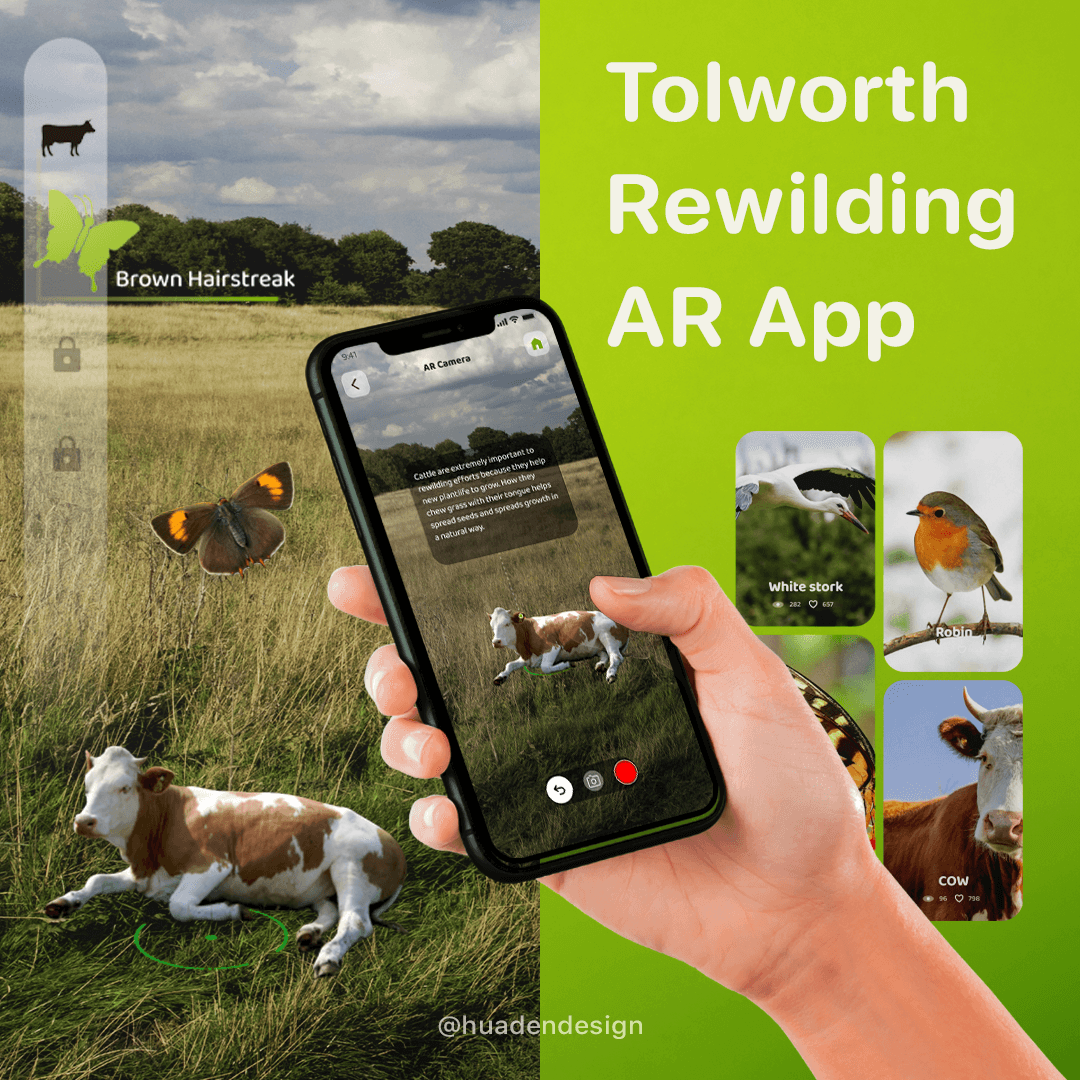
This project aimed to design an interactive AR application that enables local communities to engage with the rewilding initiative at Tolworth Court Farm Fields.
Scope of Work
This was a team project involving seven members: two UX researchers, two UI designers, two animators, and one game designer. As a UX researcher, I primarily focused on primary research and usability testing. In addition, I acted as a facilitator within the group, contributing to discussions throughout the design process and collaborating closely with other roles to shape the overall solution.
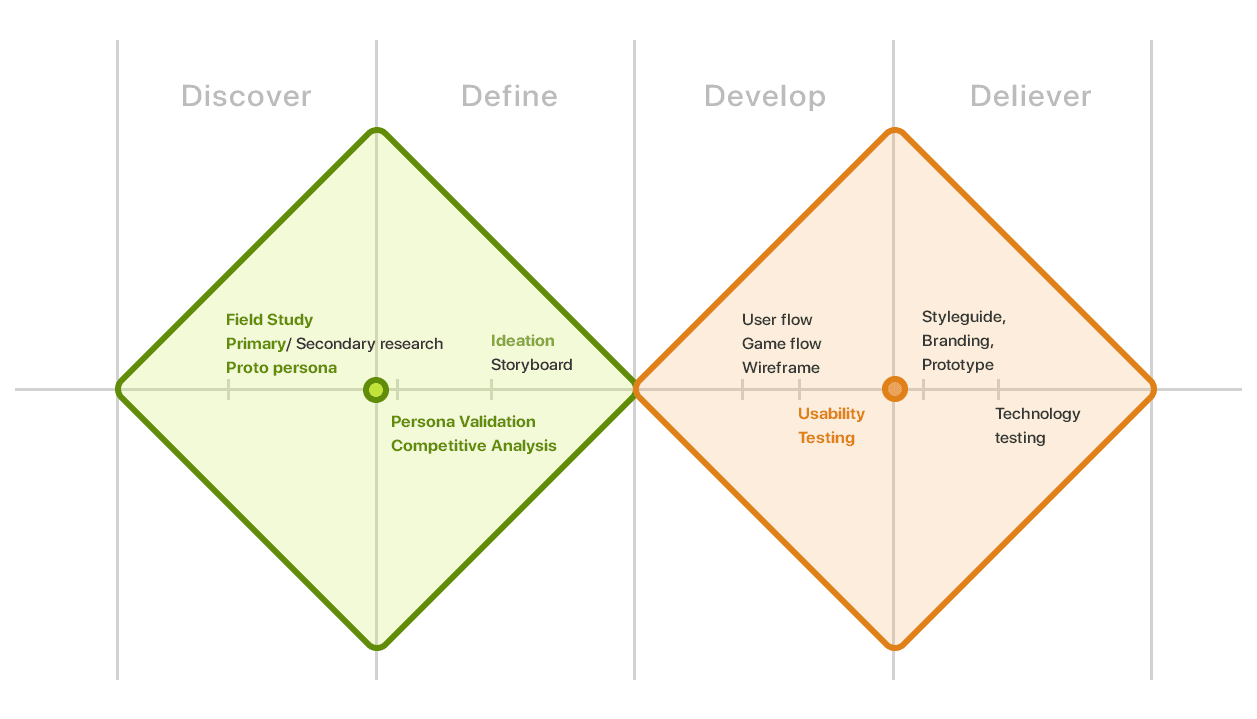
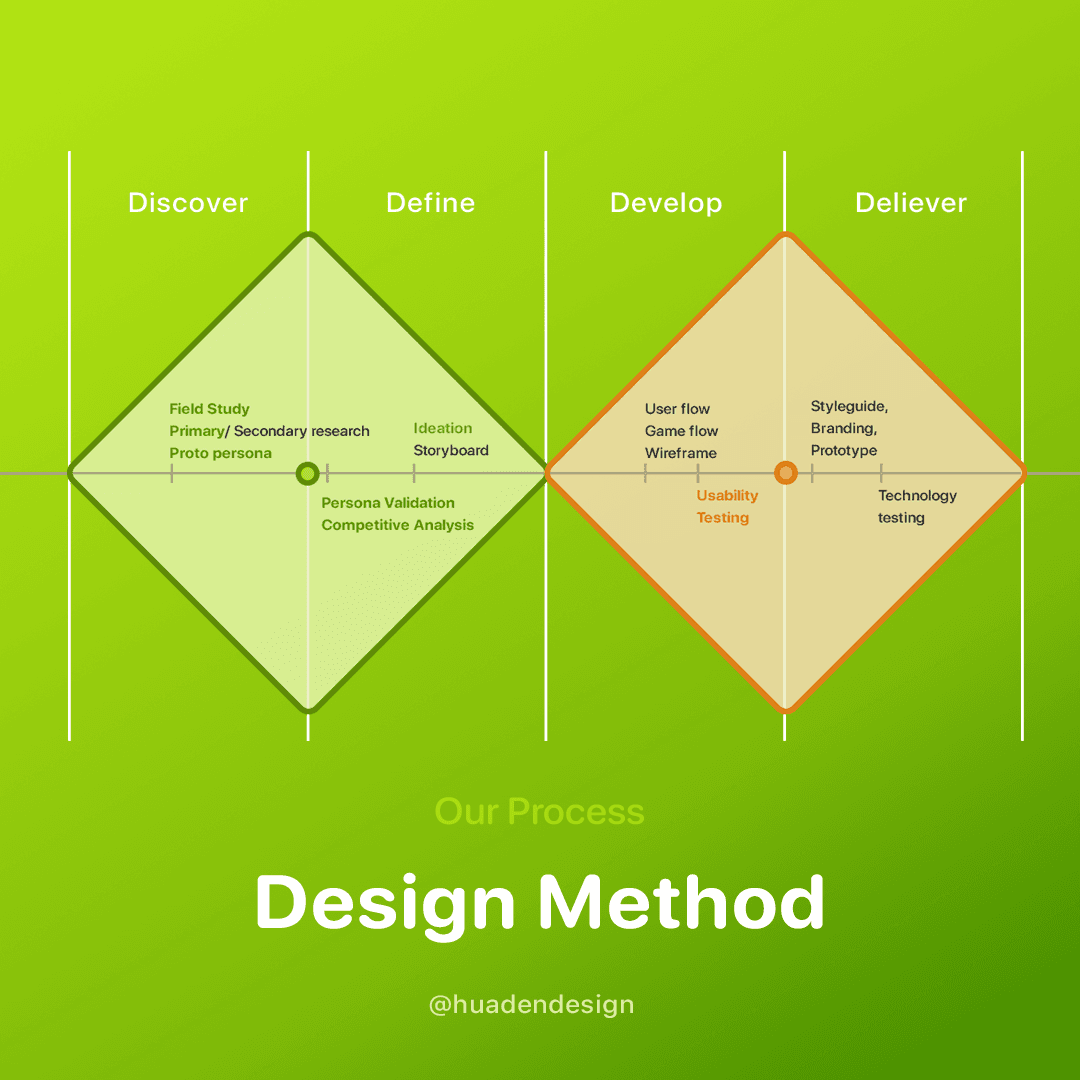
Double-Diamond Design Thinking Approach
In this project, we followed a Lean UX methodology alongside the double-diamond design thinking approach. This allowed the team to iteratively explore the problem through cycles of divergence and convergence.
Through this process, the group generated multiple design concepts, evaluated which elements best addressed user needs, and refined those ideas through further iteration. This approach helped ensure that the final design decisions were grounded in both user research and continuous validation.
Research
User Interviews
To validate our initial hypotheses and gain a deeper understanding of user needs, we conducted two rounds of user interviews.
The first round took place near Tolworth Court Farm, focusing on participants’ awareness of the site and their understanding of rewilding. The second round involved five participants and aimed to explore expectations and desired features for a rewilding-focused AR application.
Key takeaways:
Visiting a park is viewed as a relaxing and enjoyable activity.
Users believe rewilding is important for future generations.
Rewilding is commonly associated with preventing animal extinction.
Users are expected to learn detailed information about animals.
Users wanted the ability to name animals and track them over time.
When using the AR app, users found that the animal previews were too small.
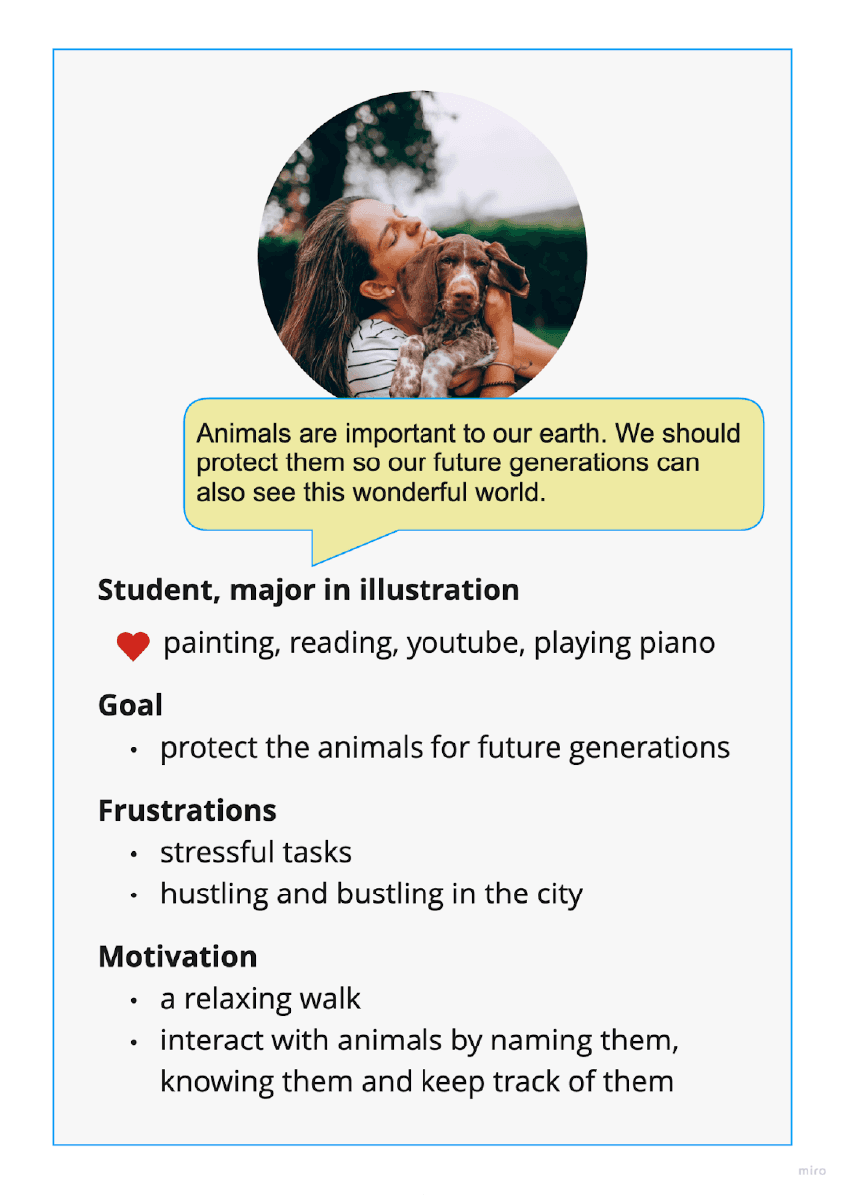
Persona Validation
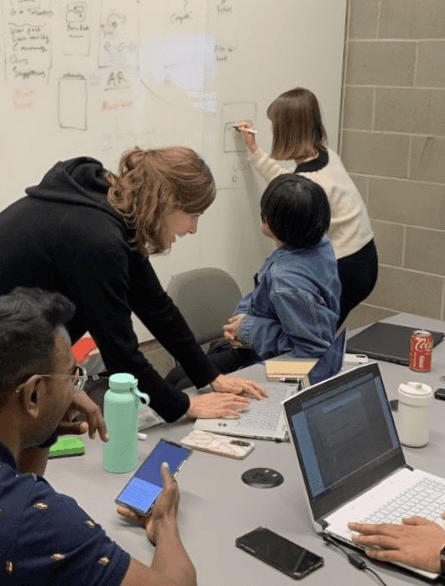
Initially, we proposed three proto-personas: casual walkers, students, and families. However, based on insights from user interviews and stakeholder discussions, we narrowed the focus to two primary personas: students and families.
The persona illustrations were intentionally kept concise, allowing the team to reference them easily and efficiently throughout the design process.
Competitive Product Analysis
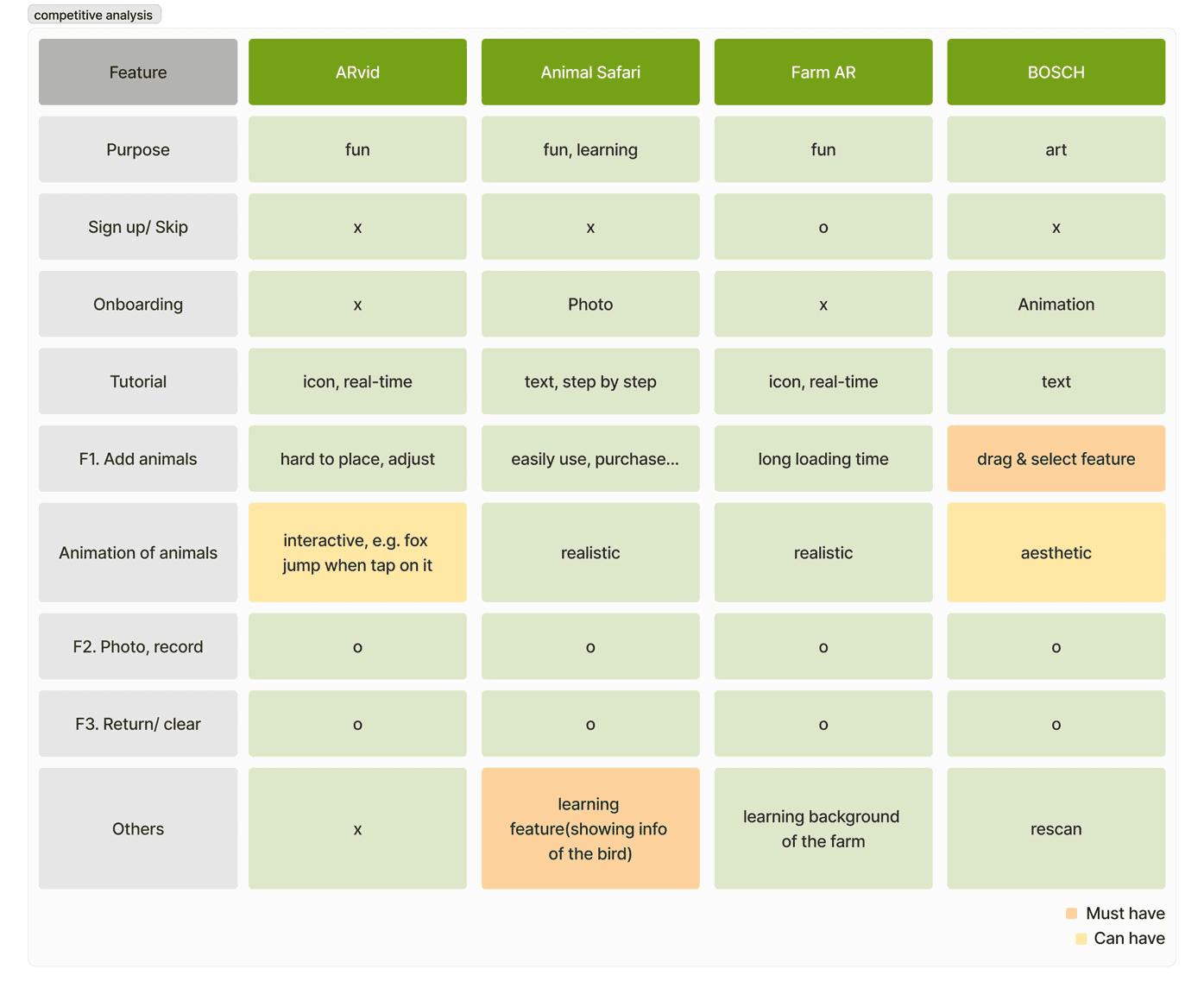
To understand common functionalities and interaction patterns in AR applications, we conducted a competitive analysis of four AR apps that feature animal placement experiences. These included ARvid, Animal Safari, Farm AR, and the Bosch app. The findings helped inform feature prioritisation and interaction design decisions.
Evaluation
Usability Testing
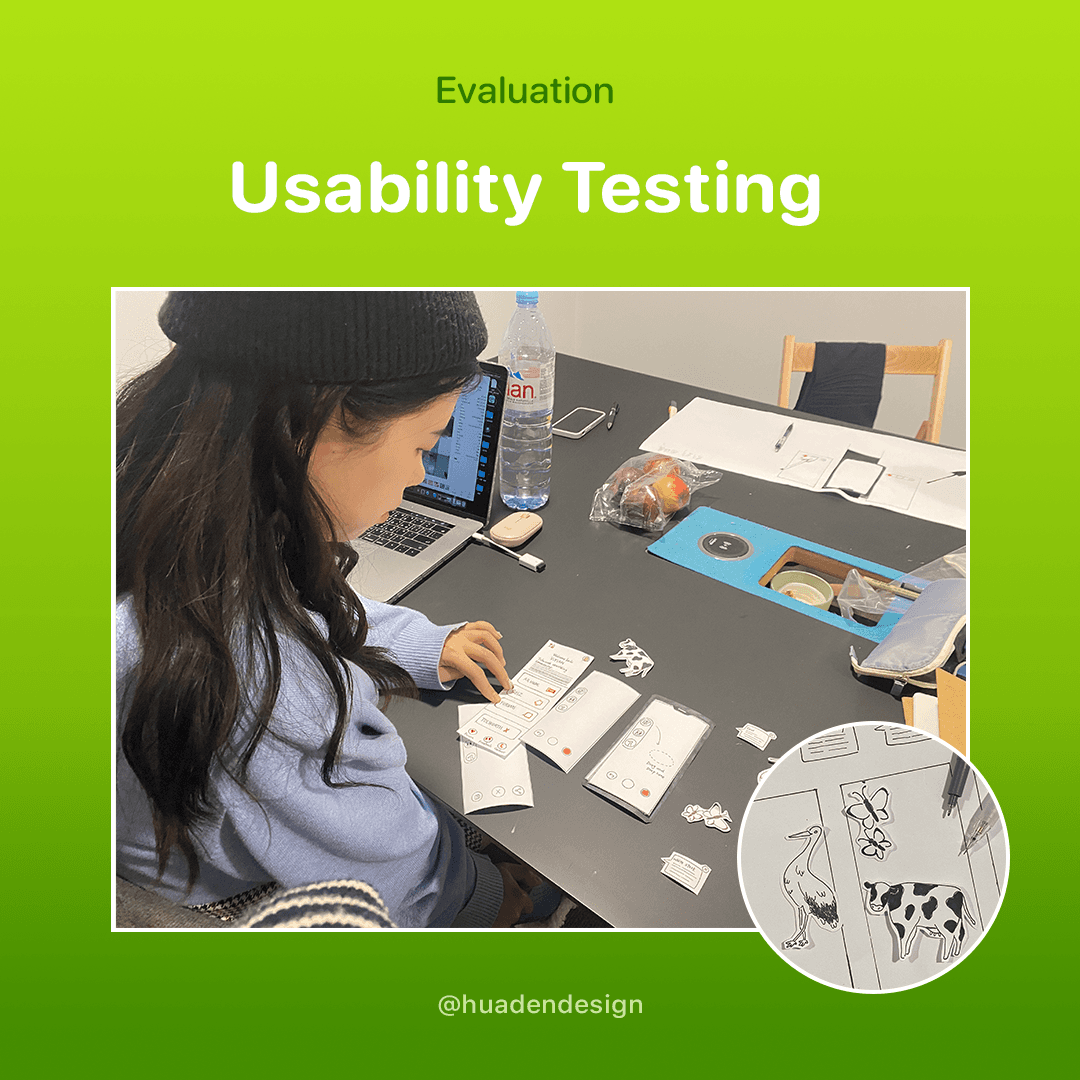
After completing the low-fidelity wireframes, I conducted a usability test using a paper prototype to evaluate the app’s core functionality before moving into higher-fidelity prototyping.
The goal of this test was to observe how users interacted with the app and to refine the design based on their feedback. By asking participants to complete two key tasks, we identified several usability issues.
Findings:
The drag-and-drop function and preview function needed to be separated.
The record function was unclear to users.
Dragging and dropping animals alone was not engaging enough.
Users expressed a desire to name each animal to create a stronger sense of attachment.
Highlight UI Features
Based on the research findings, the following features were designed and evaluated with users.
Feature 1

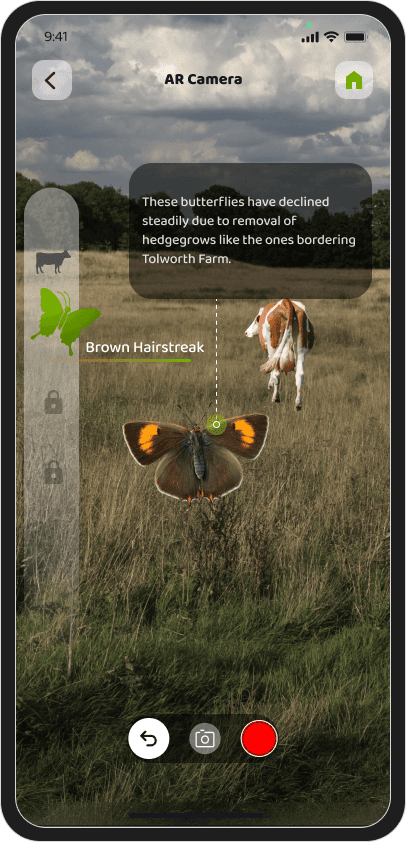
Gamified Drag and Drop
Animals can be moved around the farm, dropped and dragged anywhere. Players can interact with augmented reality (AR) features to rewild Tolworth Farm and learn more about the native species and biodiversity.
Feature 2
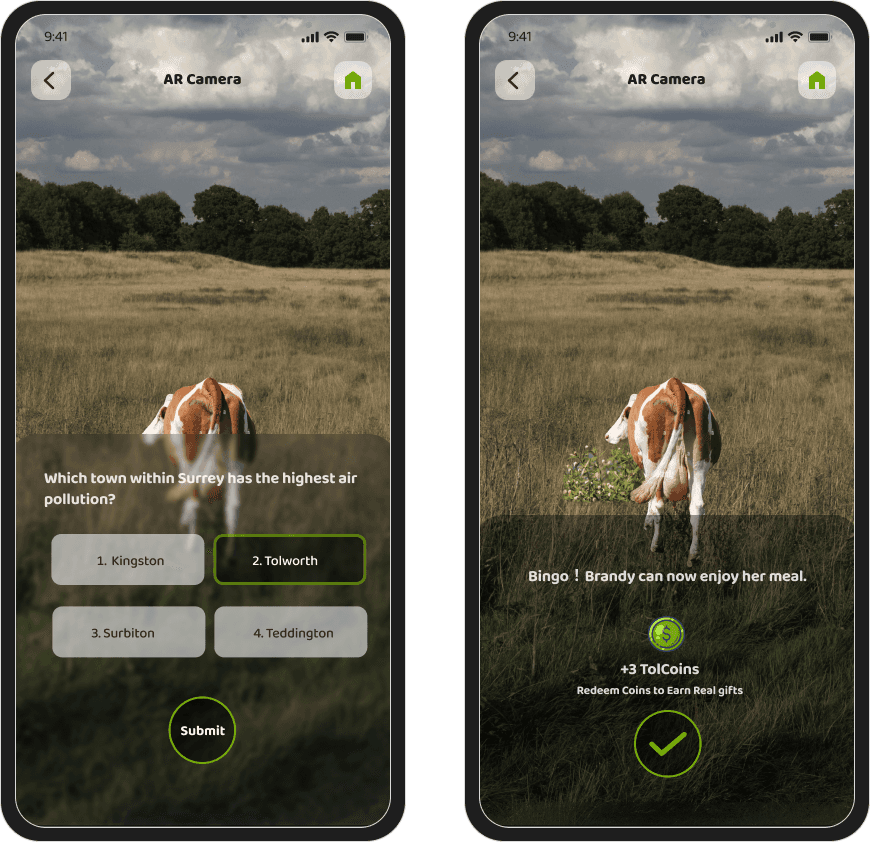
Rewarding System
The quiz would ensure the user learned something about rewilding, and the unlocking system would motivate the user to complete the quiz.
Feature 3

Bring people together!
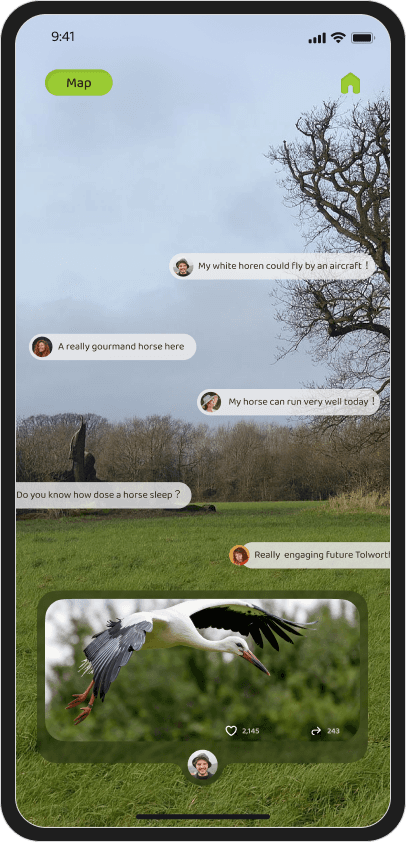
“The more the merrier.” It is the concept of our community system. After a few people first share their works, we hope they can trigger more and more people to have a look at Tolworth farm and maybe they will find the real heron!
Reflection
The importance of the pilot study
In the phase of creating the affinity map, I realized that I forgot to include the users’ dislikeness, which made me hard to create the persona profoundly. Nevertheless, I then came up with the idea of including the frustrations when users were testing the AR app. And I learned from this experience that I should always walk through the interview or do a pilot test in advance to make sure the research method is well-organized.